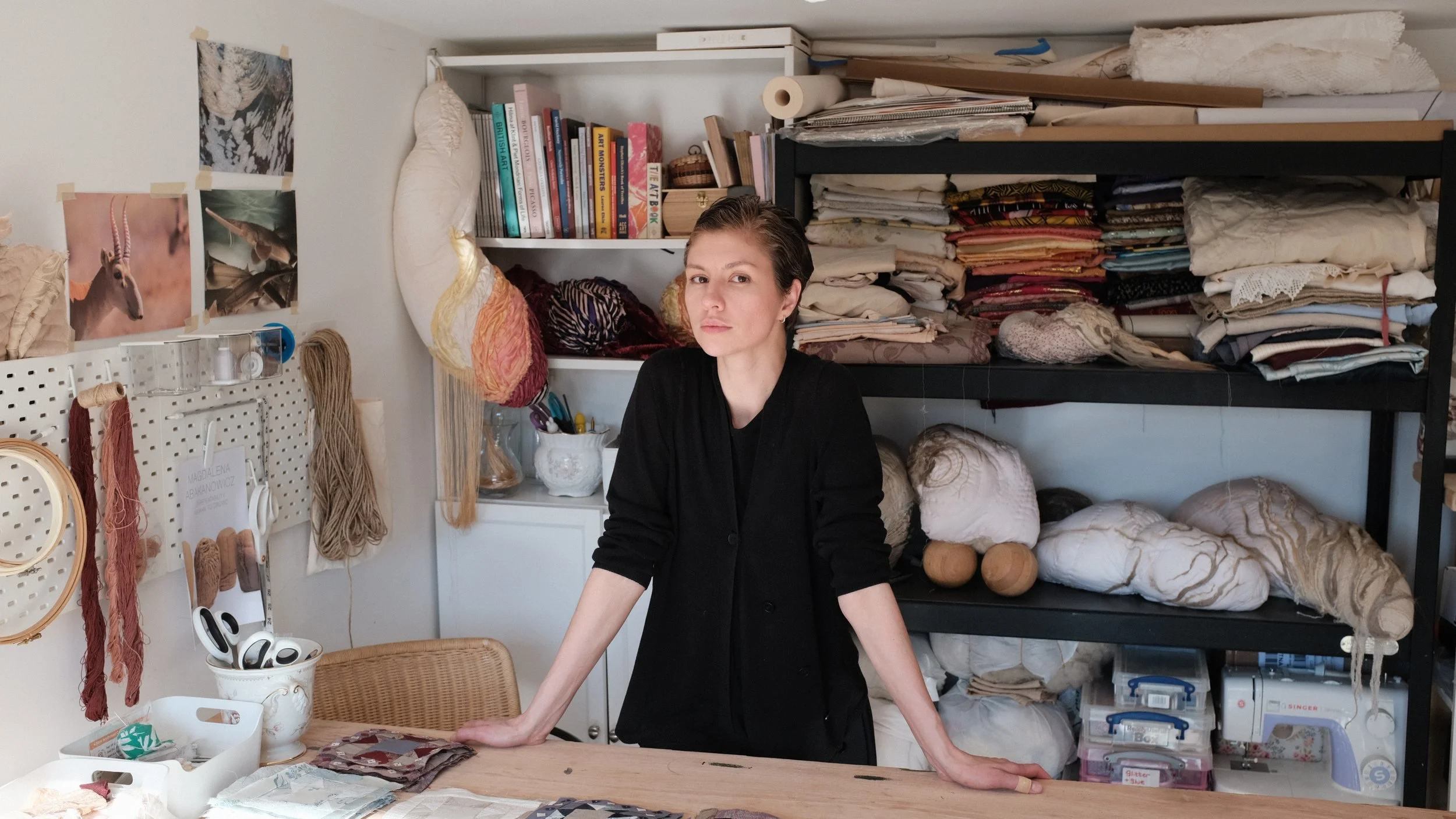
(b. 1991, Uzbekistan) lives and works in London, UK.
Zulfiya Spowart’s multimedia practice explores invisible gestures of care as integral elements of the systems that sustain the functioning of society, its public institutions, and its spatial infrastructures. It is precisely through these gestures that everyday life is composed; yet they are more often perceived as a given rather than as conditions that shape the very possibility of existence.
This concerns various forms of care and their manifestations: the care of newborns and children—where the artist’s personal experience of motherhood plays a significant role—the support of the elderly, and the accompaniment of the sick, that is, states of temporary or prolonged loss of capacity for work that place the subject outside the logics of productivity. At the same time, this field includes practices of discipline and other forms of normalization of bodily behavior that prepare individuals for social interaction. Care thus appears not only as support but also as a mechanism of regulation.
At the center of Spowart’s artistic method is an effort to illuminate a marginalized domain of the social, displaced into the sphere of the intimate, and to articulate a “grey zone” of everyday supportive practices situated at the periphery of institutional attention. To make this zone visible is to grant it the status of a conscious and, therefore, politically significant experience. This orientation determines both the scale of the works—often tending toward monumentality—and their affective dimension: the creation of “warm” structures capable of receiving, containing, and engaging those who are often excluded from public space.
The choice of materials also plays a significant role. The artist is drawn to the secondary—to what has already been used, recycled, bearing traces of touch and retaining warmth. Working with such materials gives Spowart’s practice an additional conceptual dimension, revealing the continuous, cyclical nature of invisible labor and shaping a particular tactile and affective economy of interaction.
The material heritage of Central Asia, the artist’s native region, understood broadly as a set of practices transmitted from generation to generation, also serves as an important source. However, this heritage manifests itself not so much at the level of vernacular forms as as a system of knowledge in which each form is determined by function. No detail is superfluous: each is linked to a specific action, gesture, or task, and is embedded within a broader system of sustaining life.
— Dilda Ramazan, curator
-
2013-2017 - Bachelor Degree Mural Arts at National Institute of Fine Arts and Design named after Kamoliddin Behzod
Solo exhibitions:
Upcoming - 2027 Mothering Spaces, Cavan Art Center, Cavan, Ireland
2024 “Elly-Belly” St. Margarets House, London, UK
Selected group exhibitions:
2026 “The Aural Sea” The Uzbekistan National Pavilion at the 61st Venice Biennale of Art
2026 “What Remains Within” Annely Juda Fine Art, London, UK
2026 “Maisons” Galerie de l’Est, Compiène, France
2026 “Theatre of Memory” Lohuti Theatre, Dushanbe, Tajikistan
2025 Luxembourg Art Week, Glacis Square, Luxembourg
2025 “Surface Reflections” The Silk Road Pavilion - London Design Biennial, Somerset House, London, UK
2025 “In/Visible” Galerie de l’East, Compiègne, France
2024 “The Mirror” Tashkent, Uzbekistan
2024 “The First Art Festival”, Regeneration, Tashkent, Uzbekistan
2019 “Another Spaces” Kvartira, Tashkent, Uzbekistan
2017 “Tsvetaeva. Phaedra" Mark Weil Theatre, Tashkent, Uzbekistan
Artist in Residence:
01.02.2025-31.03.2025 Art’otel Hoxton, London, UK
Talks:
30.10.2026 Redefining Cultiral Heritage, from “The Cradle” to the Pavilion. Zulfiya Spowart and Maria Redaelli in conversation , Pushkin House, London, UK
Publications:
2026 ODRA Platform: Essay “Frames and Borders: Beyond the Binary Frameworks of Tradition Versus High Art”
Workshops:
2025 Somerset House, Silk Road Pavilion at the London Design Biennale: Immersive Textile
2025 Art’Otel Hoxton: Mothers Day Textile Collage