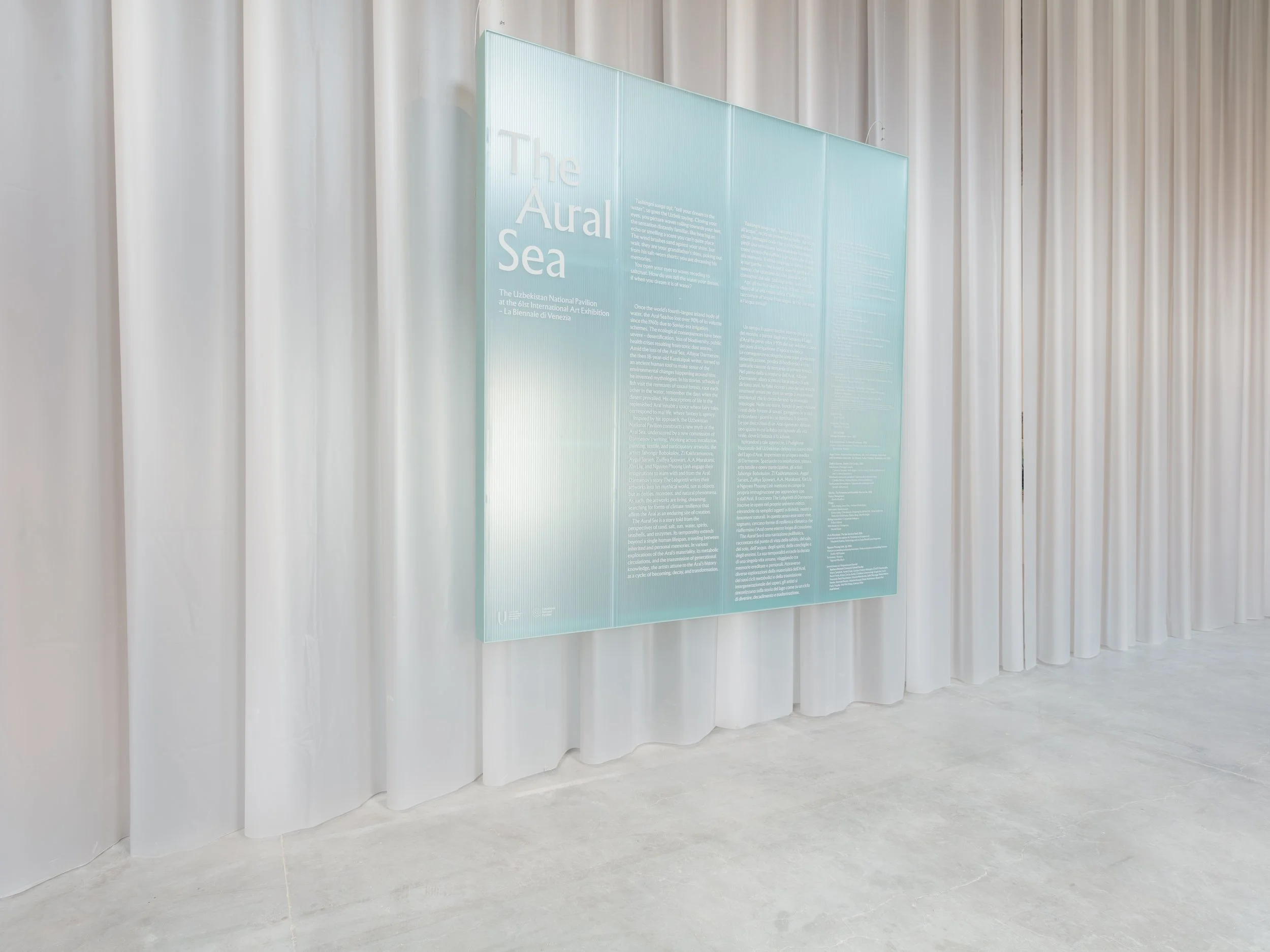
The Aural Sea
The Uzbekistan National Pavilion at the 61st Venice Biennale of Art 09/05/2026 - 22/11/2026
The Pavilion turns to mythmaking and storytelling as ways of responding to environmental transformation – and of learning from the Aral Sea region of Karakalpakstan, Uzbekistan. Since the 1960s, the large-scale diversion of the region's rivers for agricultural irrigation has caused the Aral Sea to lose over 90% of its volume, turning one of the world's largest inland lakes into desert.
The Aral basin has long been a crossroads. Situated on the northern branch of the Silk Road, the region's archaeological record reveals layers of civilisation shaped by the dynamics of water. When Marco Polo travelled through Central Asia in the thirteenth century, the Aral Sea does not appear in his account, an absence that resonates with a landscape whose shorelines have shifted over centuries.
Here, the presence and absence of water is not only a modern condition but a long temporal structure that continues to shape how communities live, remember, and imagine. Fishermen have told stories of glimpsing ruined cities on the lakebed; such moments became the seeds of new legends, binding past and future in a single image.
The Pavilion takes inspiration from Karakalpak author Allayar Darmenov, who began writing the Aral Sea back to life in 2015, when he was eighteen. In his fiction, swordfish race through replenished waters and remember the desert years. Following Darmenov, the Pavilion proposes imagination as a form of agency: mythmaking and storytelling not as escape, but as tools for navigating loss and holding open space for what might yet be possible.
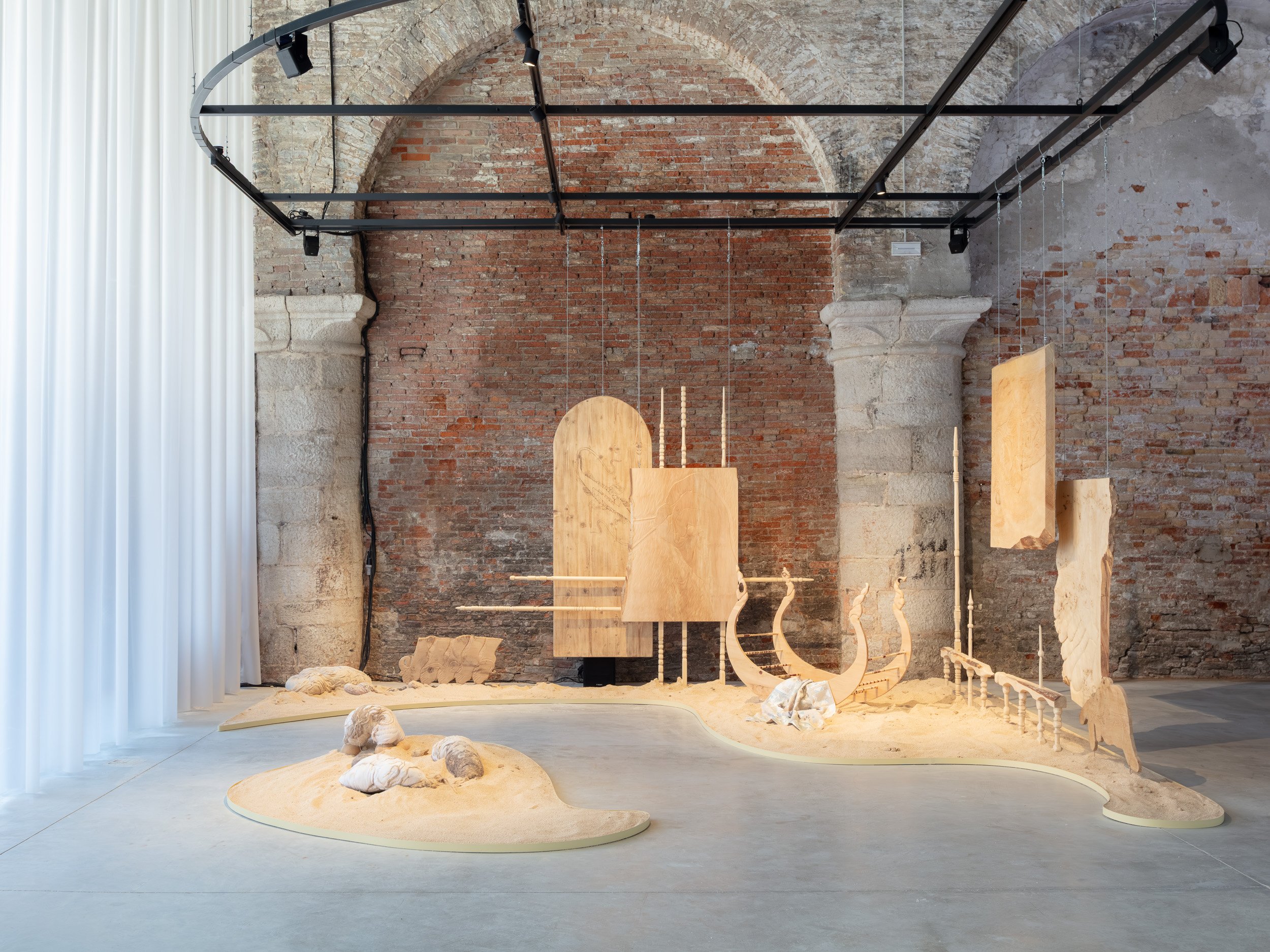
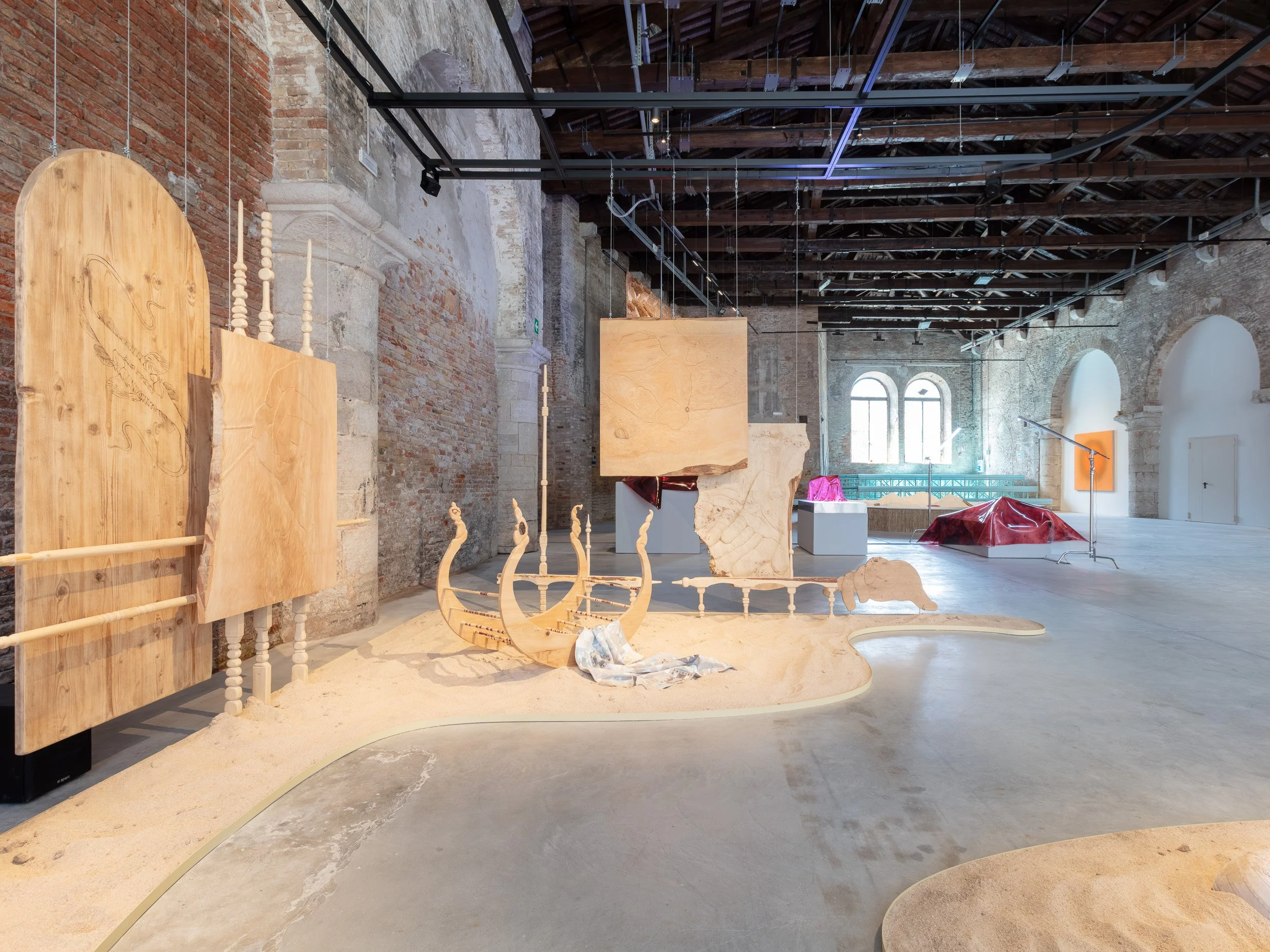
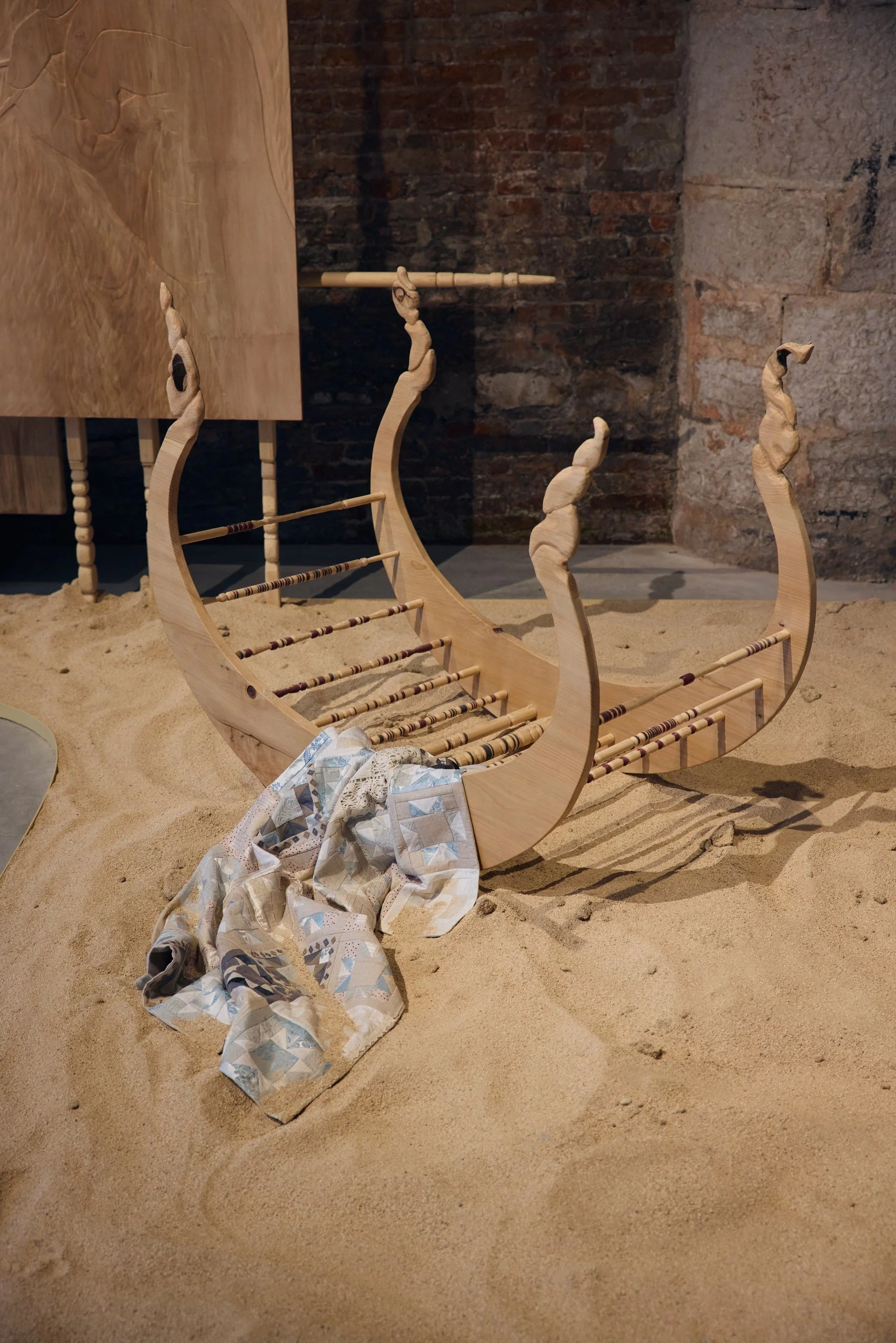
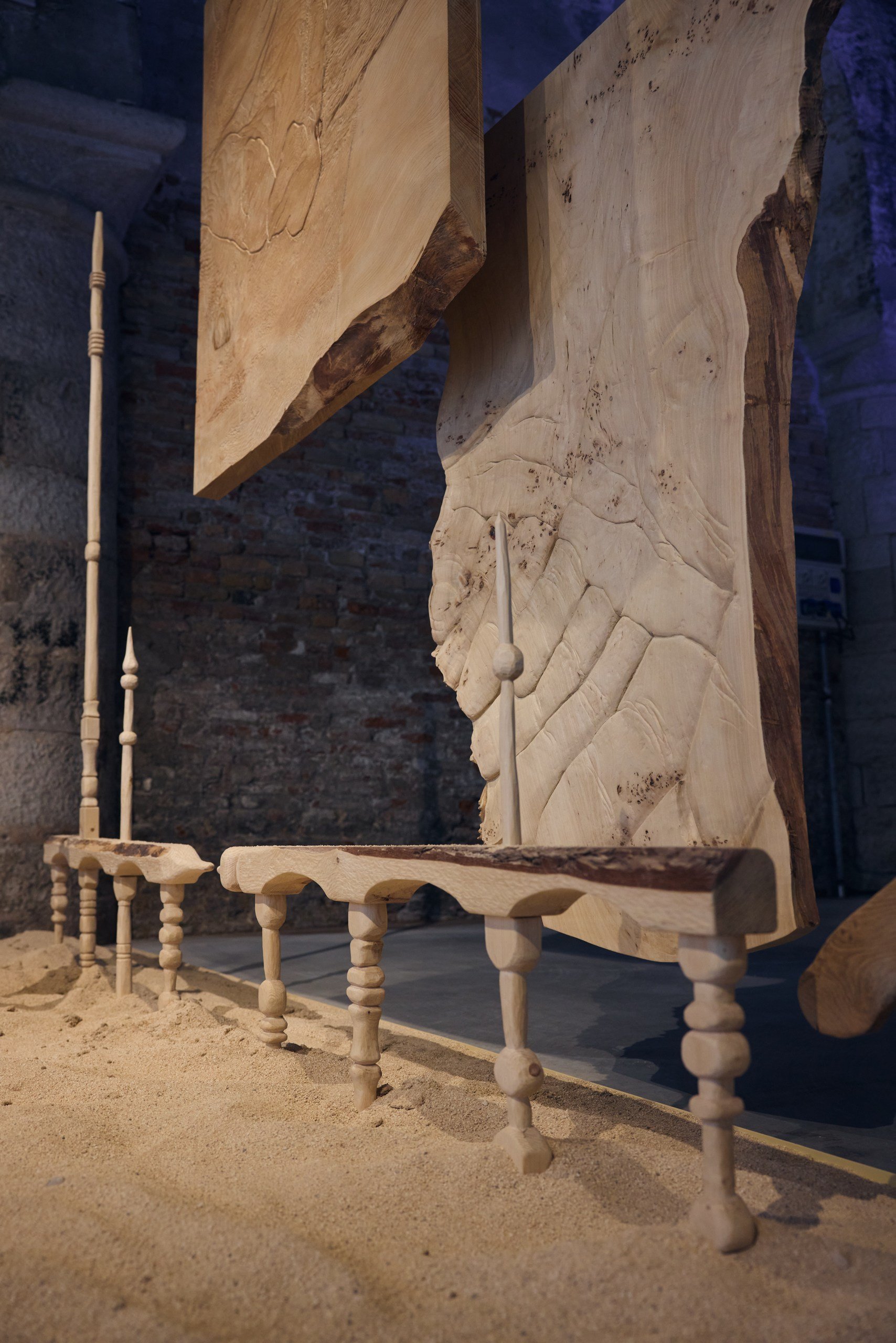
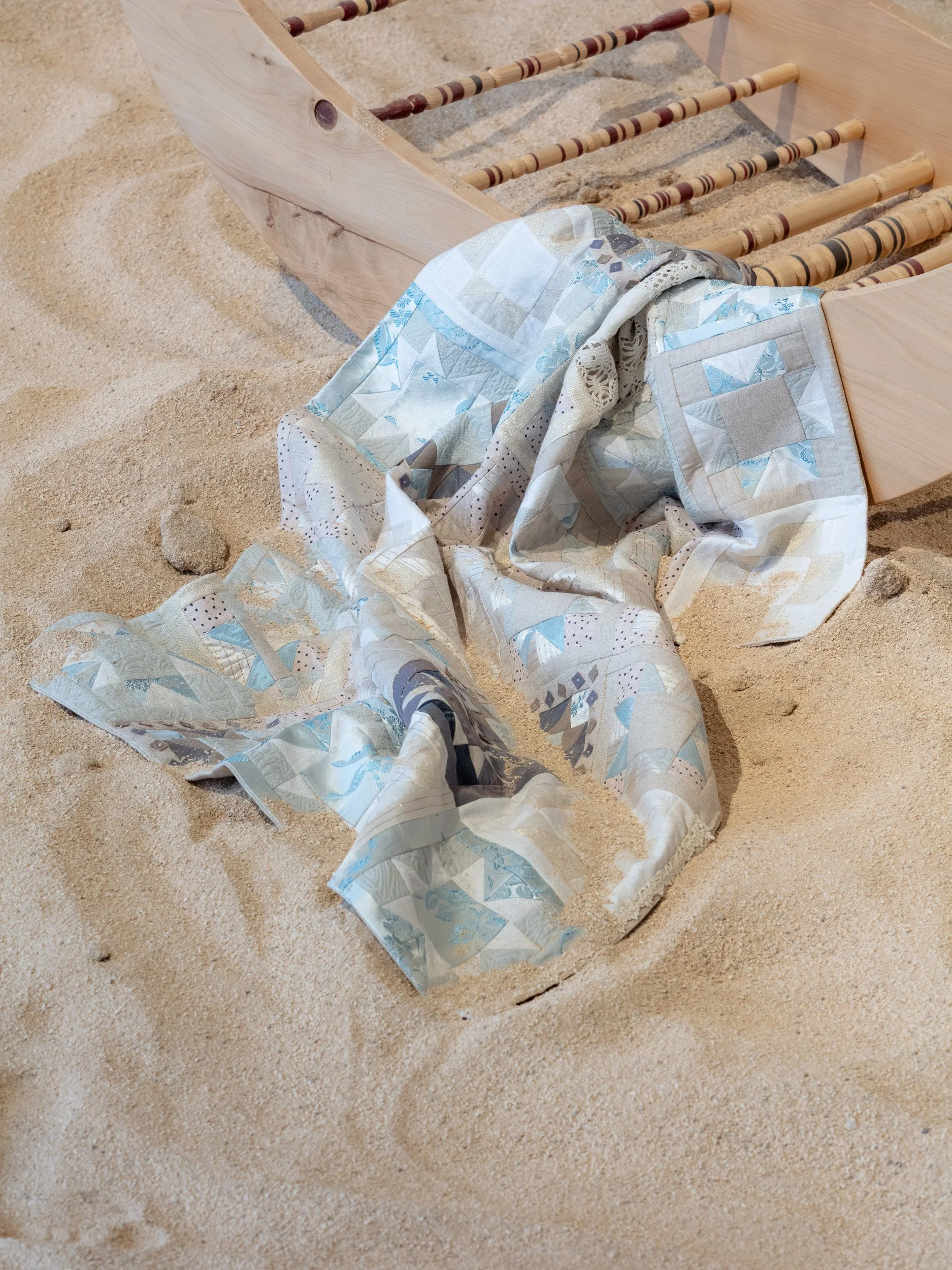
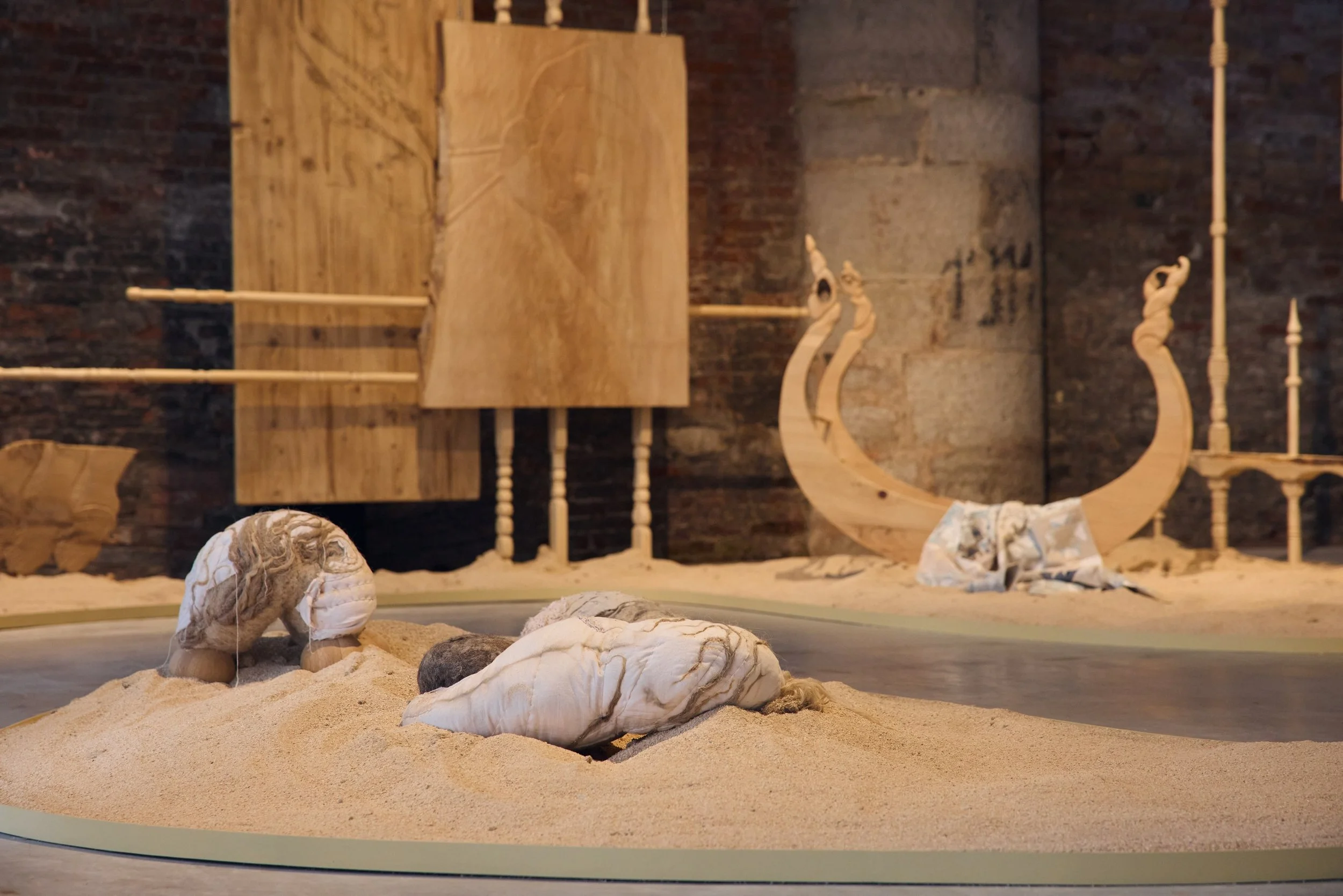
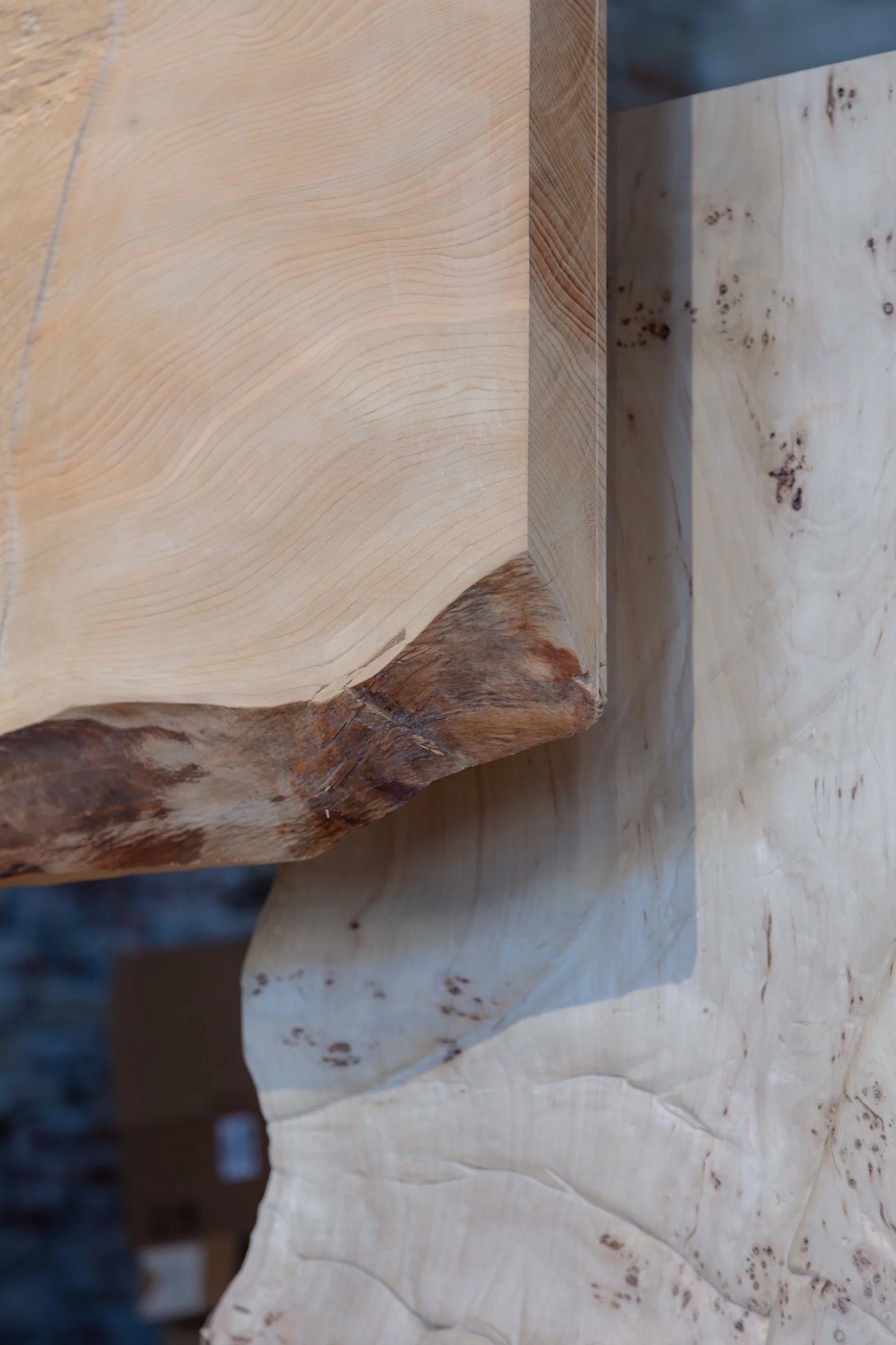
Beshik (The Cradle) Installation, 2026
Spowart's installation expands on an earlier work that centres the beshik – a Central Asian cradle considered the "first home" of a newborn. The cradle rocks, and its repetitive motion puts the child to sleep, sending the body into a state of weightlessness. But beneath the tenderness of the work is an inherent fragility: an exposure to disruptions that upsets the cradle's soothing rhythms.
The predictable back-and-forth, once off-kilter, feels to the body like falling. This sensation mirrors the body's reactions to the loss of the Aral – a heart-dropping vertigo that uproots and disorients.
The daily rhythms that centred life by the water, now offbeat, must be syncopated and adapt to the young desert. Zulfiya Spowart's explorations of the mother and child relationship, through the warmth and tactility of fabric and wood, frame the reciprocal impact between us and nature through intimacy, heartbreak, and mending. Herself a mother to three daughters, the act of caring for them became integral to her creative process: her forms and techniques arise from what she could physically carve, sew or weave while looking after her children.
Credits:
Organiser: Uzbekistan Art and Culture Development Foundation
Special support: Saida Mirziyoyeva, Advisor to the President of the Republic of Uzbekistan
Commissioner: Guyanese Umerova, Chairperson of the Uzbekistan Art and Culture Development Foundation
Curators:Sophie Mayuko Arni, Thái Hà, Nico Sun, Kamala Mukhitdinova, Aziza Izamoiva
Artists exhibiting: Zulfiya Spowart, Aygul Sarsen, AA Murakami, Nguyen Phuong Linh, Zi Kakhramonova, Xin Liu, Jahongir Bobokulov
Sound collaboration: Cameron Spowart
Artist’s assistants: Joshua Roberts, Camilla Dilshat, Elizaveta Berkutova, Ayzada Joldasbaeva
Exhibition Design and Architecture: Studio Grace
Photo: Gerda Studio
Graphic Design: Studio Pupilla
Exhibition Production: We Exhibit